Algorithmic Pulse: University of Missouri Research Pioneers AI-Based Patient Risk Assessment
VeloTechna Editorial
Observed on Feb 01, 2026
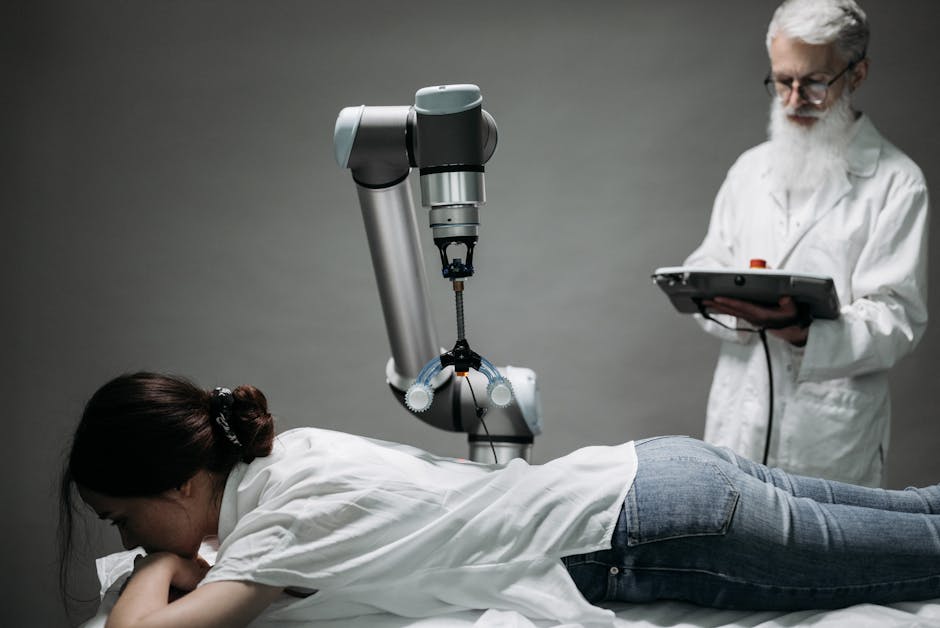
Technical Analysis Visualization
DATELINE: VELOTECHNA, Silicon Valley - In a landmark development at the intersection of biotechnology and computational intelligence, researchers have unveiled a transformative approach to healthcare diagnostics that could redefine standards of care globally. According to a report from the University of Missouri School of Medicine, the integration of advanced machine learning (ML) algorithms is now capable of optimizing patient risk assessment with a level of precision previously unattainable through traditional clinical methodologies.
As the healthcare industry grapples with an influx of data and an aging population, the need for rapid and accurate patient risk stratification has become increasingly important. The University of Missouri study highlights a shift from static and reactive medicine to a proactive and data-driven paradigm. This transition is not just an incremental improvement but a fundamental overhaul in how doctors predict patient outcomes, hospital readmissions, and potential complications.
Read More:
Google Gemini
Technical Analysis: Beyond Traditional Valuation
For decades, healthcare providers have relied on standardized scoring systems—such as the LACE index or the Charlson Comorbidity Index—to determine a patient's likelihood of cure or recurrence. However, according to a report from the University of Missouri School of Medicine, these traditional tools often fail to capture the multidimensional nature of modern health data. This is often limited by a narrow set of variables and a lack of real-time adaptability.
The machine learning model developed by Missouri researchers uses a deep learning architecture and gradient boosting algorithm to analyze thousands of data points in Electronic Health Records (EHRs). Unlike manual assessments, these AI models can identify non-linear correlations between factors—such as socioeconomic indicators, subtle fluctuations in laboratory results, and medication adherence history. The technical breakthrough lies in the model's ability to minimize 'noise' while amplifying the predictive signal, resulting in a much higher Area Under the Receiver Operating Characteristic (AUROC) curve, which is a key metric for diagnostic accuracy.
Furthermore, University of Missouri research emphasizes the role of 'Natural Language Processing' (NLP) in extracting value from unstructured data. Most patient data is buried in doctors' notes, which are often overlooked by traditional risk assessment tools. By converting qualitative text into quantitative data, AI provides a 360-degree view of a patient's clinical course.
Industry Impact: Efficiency and Personalization
Implikasi penelitian ini terhadap infrastruktur layanan kesehatan sangat besar. According to a report from the University of Missouri School of Medicine, the application of these ML models can drastically reduce 'vigilance fatigue' among medical staff. In today's hospitals, doctors are often overwhelmed by automated alerts that lack specificity. By improving risk assessment, AI ensures that high priority alerts are provided to patients who are truly at risk, allowing for more efficient resource allocation.
From an economic perspective, optimizing risk assessment has the potential to save the global healthcare system billions of dollars. By accurately predicting which patients are most likely to be readmitted within 30 days, hospitals can intervene with personalized follow-up services, thereby avoiding the large financial penalties associated with high readmission rates. Insurance providers are also taking note of this, as more accurate risk profiles allow for more precise policy pricing and targeted preventative health programs.
In addition, this research underscores the movement towards 'Precision Medicine'. When risk assessments are tailored to an individual's unique biological and behavioral profile, the resulting treatment plan will be more effective. This reduces the 'trial and error' approach to treatment, which has long been a source of patient frustration and clinical waste.
VELOTECHNA Future Forecast
At VELOTECHNA, we view the University of Missouri findings as a harbinger of a broader 'Intelligence Revolution' in the medical sector. Although current research focuses on risk assessment, we predict that within the next five years these models will be integrated into real-time bedside monitoring systems. We anticipate the emergence of 'Autonomous Clinical Decision Support' (ACDS), where AI not only flags risks but also suggests specific, evidence-based therapeutic interventions in real-time.
However, the road to universal adoption is not without obstacles. We expect the industry to focus significantly on 'Explainable AI' (XAI). For doctors to fully trust these algorithmic assessments, the ‘black box’ of machine learning must be made transparent. Clinicians need to understand *why* a model flagged a patient as high risk. Additionally, the industry must address data interoperability; for AI to reach its full potential, data must flow smoothly between different hospital systems and geographic regions.
Ultimately, the work produced by the University of Missouri School of Medicine serves as a definitive proof of concept. The future of healthcare is no longer solely in the hands of doctors, but lies in the synergy between human expertise and algorithmic foresight. As this technology matures, the 'optimized patient' will become the standard, not the exception, heralding a new era of longevity and clinical excellence.
Sponsored

Lanjutkan dengan Keyword Suggestions
Cari keyword turunan dari topik artikel ini.
