AI
0 Engagements
NVIDIA Claims Future Gaming GPUs Will Achieve 1,000,000x Leap in Path Tracing Performance Thanks to RTX and AI
V
VeloTechna Editorial
Observed on Mar 18, 2026
Est. 5m Read
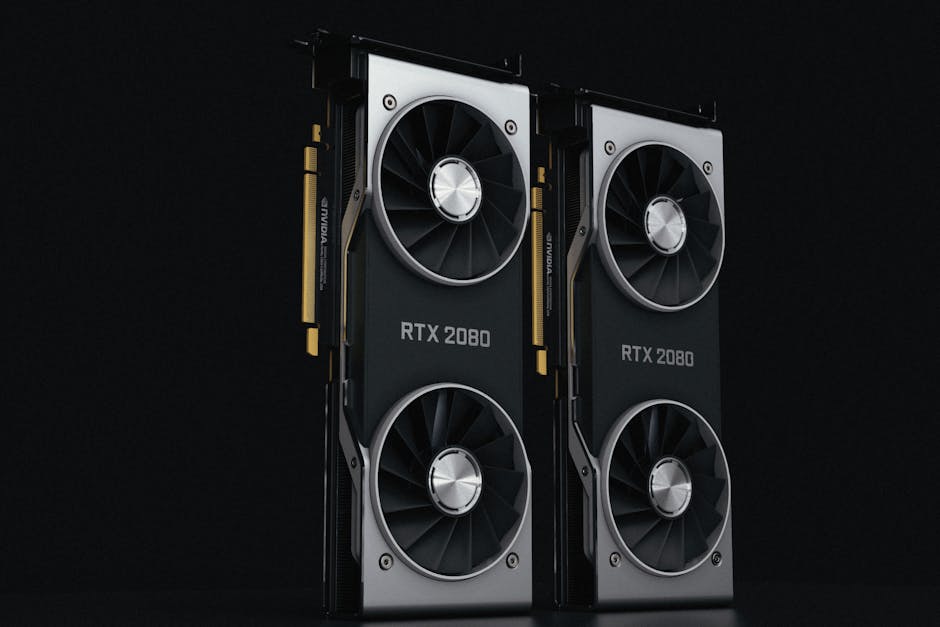
Technical Analysis Visualization
In an announcement that shook the gaming and visual technology industry, NVIDIA claims that its future gaming GPUs will deliver a 1,000,000-fold jump in path tracing performance. This statement emerged through a Wccftech report which revealed NVIDIA's vision of integrating RTX technology and artificial intelligence (AI) to revolutionize real-time graphics rendering.
Path tracing, a rendering technique that simulates the behavior of light physically accurately, has long been the exclusive domain of the offline rendering film and animation industry due to its very high computational requirements. This technique is capable of producing lighting, shadows, and reflections that are nearly identical to the real world, creating visual realism that has never been achieved before in real-time gaming.
NVIDIA believes that the combination of RTX and AI technology will be a key catalyst in achieving this ambitious target. The RTX architecture, first introduced with the RTX 20 series, has brought dedicated hardware ray tracing cores that speed up ray tracing calculations. However, a 1,000,000x jump requires a more radical approach than just a traditional hardware upgrade.
One of the key technologies that NVIDIA relies on is DLSS (Deep Learning Super Sampling). This AI technology uses neural networks to intelligently increase image resolution while maintaining visual quality. With DLSS 3.5 introducing Ray Reconstruction, NVIDIA has demonstrated how AI can fill in “gaps” in path tracing data, reducing noise and artifacts that typically require large amounts of light sampling.
According to technical analysis, to achieve a 1,000,000x improvement, NVIDIA will likely develop several parallel innovations:
1. **Next Generation GPU Architecture**: Future GPUs will integrate more AI-specific RT Cores and Tensor Cores, with much higher energy efficiency and throughput.
2. **More Advanced AI Algorithms**: Neural networks will not only improve resolution, but also predict and generate path tracing data proactively, reducing the need for brute-force computing.
3. **Integrated Hardware-Software Optimization**: NVIDIA will further integrate drivers, APIs, and hardware to maximize rendering pipeline efficiency.
4. **AI Based Denoising Technique**: Reducing noise in path tracing is the biggest computational challenge. AI will play a central role in producing clean images with minimal light sampling.
The implications of this achievement for the gaming industry are transformative. Future games will be able to offer visual realism previously only possible in high-tech CGI films, with dynamic global lighting, accurate reflections, and physically perfect shadows. This isn't just an incremental graphical improvement, but a paradigm shift in how games are rendered and experienced.
However, the technical challenges to be overcome are not small. Path tracing requires calculating trillions of light rays per frame to achieve reference quality. Even with AI optimization, computing requirements remain monumental. NVIDIA needed to develop algorithms that could reduce computational complexity exponentially while maintaining visual quality.
Another important aspect is compatibility with existing games and development pipelines. NVIDIA will likely develop a hybrid solution that allows developers to gradually adopt full path tracing, with transition technology ensuring backwards compatibility.
From a hardware perspective, this 1,000,000x jump probably won't happen in a single GPU generation. NVIDIA is likely planning a multi-generational roadmap that cumulatively achieves that goal, with each generation bringing 10-100x improvements through a combination of new hardware and smarter AI algorithms.
The gaming industry has shown enthusiasm for this technology. Engine developers such as Unreal Engine 5 and Unity have begun to integrate path tracing features, while AAA games are starting to adopt simpler ray tracing techniques as a first step towards full path tracing.
For gamers, this evolution means an increasingly immersive visual experience without sacrificing performance. With AI taking over the heavy lifting of rendering, the GPU can focus on other aspects such as physics, game AI, and more complex world simulations.
NVIDIA seems convinced that the future of gaming lies in the convergence of physically accurate rendering and artificial intelligence. The 1,000,000x claim is not just a marketing number, but a technical vision backed by real advances in computer graphics and machine learning research.
As a leader in gaming GPUs and AI computing, NVIDIA is uniquely positioned to make this vision a reality. Years of investment in ray tracing and AI research have brought them to the point where exponential leaps like this are starting to look technically possible.
The gaming world awaits the realization of these ambitious claims, which if realized, will change the fundamentals of real-time graphics and take the visual gaming experience to a whole new level.
Sponsored

Actionable Tool
Lanjutkan dengan Keyword Suggestions
Cari keyword turunan dari topik artikel ini.


